| Monday: | 8:00 AM - 5:00 PM |
| Tuesday: | 8:00 AM - 5:00 PM |
| Wednesday: | 8:00 AM - 5:00 PM |
| Thursday: | 8:00 AM - 5:00 PM |
| Friday: | 8:00 AM - 5:00 PM |
| Saturday: | Closed |
| Sunday: | Closed |


Greg’s Trans-Electric - Engine Diagnostics & Check Engine Light Service in Missoula, MT
-
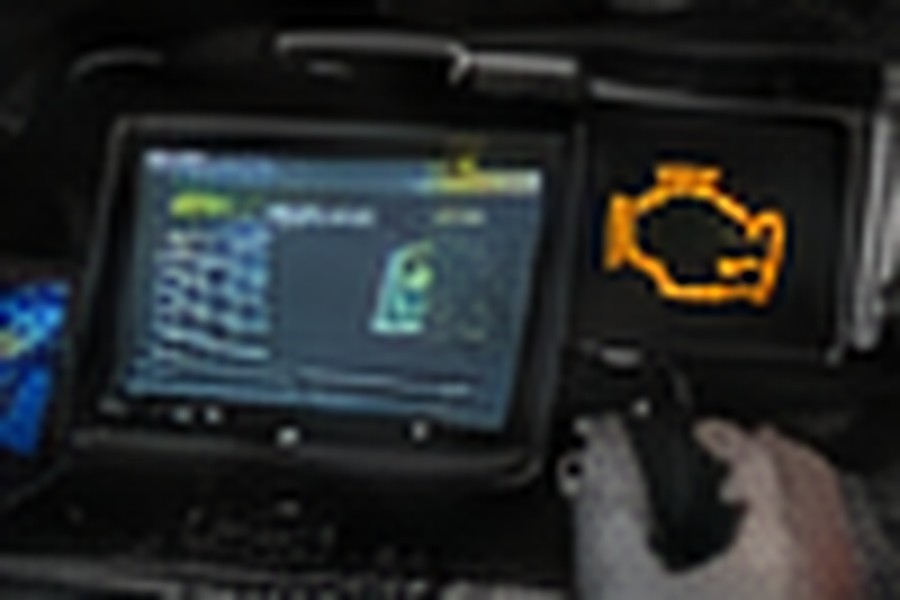
Get clear answers for check engine lights, rough running, misfires, no-start concerns, and other drivability problems.
A check engine light is a request for diagnosis, not a diagnosis by itself. Modern vehicles continuously monitor engine, emissions, fuel, ignition, transmission, and electrical systems. When the computer detects data outside an expected range, it can store one or more diagnostic trouble codes and turn on a warning light. Those codes are valuable clues, but they do not automatically identify the failed part. At Greg’s Trans-Electric, engine diagnostics are aimed at finding the cause of the symptom so the repair addresses the problem rather than simply replacing parts associated with a code.
Drivers often search for “check engine light repair” or “engine diagnostics in Missoula” after a vehicle begins running rough, loses power, stalls, uses more fuel, cranks without starting, or illuminates a dashboard warning. Some faults are simple; others require methodical testing. A loose connection, vacuum leak, ignition fault, fuel-delivery problem, sensor issue, mechanical condition, wiring problem, or control-system fault can produce overlapping symptoms. The most efficient path is usually to verify the concern, retrieve system information, and then test the circuit or component the evidence points toward.
Accurate diagnosis can also prevent unnecessary repairs. A trouble code naming an oxygen-sensor circuit, for example, does not prove the sensor itself is defective. The cause could be wiring, exhaust leakage, fuel mixture, another sensor, or a system condition affecting the reading. Good diagnostics separates the symptom, the code, and the root cause.
-
You Can Count On Greg’s Trans-Electric
- ASE Certified
- ATSG Member
- Transmission Specialists
- Locally Owned & Operated
- In Business Since 1964
- Great Customer Service
- Quality Work - Affordable Rates
We work on supported domestic and Asian vehicles, including diesel vehicles. European, hybrid and electric vehicles are not serviced. Please call to confirm your vehicle and repair needs.
What Engine Diagnostics Actually Involves
The first step is to understand what the vehicle is doing and when it happens. Does the problem occur cold, hot, under load, at idle, after refueling, only on the highway, or only during a cold start? Is the warning light steady or flashing? Did the vehicle recently have a battery disconnected or another repair performed? Driver observations can save diagnostic time because intermittent problems may not be present when the vehicle reaches the shop.
A scan tool can retrieve stored codes, pending codes, freeze-frame information, and live data from vehicle modules. That information helps narrow the investigation, but it is only part of the process. Depending on the concern, diagnosis may also involve visual inspection, electrical measurements, circuit testing, vacuum or smoke testing, fuel-pressure checks, ignition testing, mechanical testing, or comparison of sensor data. The exact test plan depends on the evidence rather than a fixed checklist.
When multiple codes are present, the order matters. One underlying problem can create several secondary codes. Replacing a part for each code can waste money and still leave the vehicle unrepaired. A technician instead looks for relationships among the codes, symptoms, and operating data to identify which fault is primary.
Check Engine Light: Steady vs. Flashing
A steady check engine light generally means the onboard diagnostic system has detected a fault that should be investigated. The vehicle may appear to run normally, or there may be a noticeable drivability problem. It is wise to schedule diagnosis rather than ignoring the light because some faults can increase emissions, reduce fuel economy, or create secondary damage over time.
A flashing check engine light is more urgent. On many vehicles, flashing indicates a severe misfire capable of overheating and damaging the catalytic converter. If the engine is shaking, power is reduced, or the light is flashing, reduce load and follow the vehicle manufacturer’s guidance. Continuing to drive aggressively with an active severe misfire can turn an ignition or fuel problem into a much more expensive exhaust repair.
Dashboard lights should also be distinguished from one another. A maintenance reminder, oil-pressure light, charging-system light, temperature warning, ABS light, and check engine light refer to different systems and levels of urgency. If you are unsure which warning you are seeing, note the symbol or take a photo safely before calling the shop.
Diagnostic Concerns We Can Evaluate
- Check engine light and stored trouble codes
- Engine misfire or rough running
- Hard start or crank-no-start conditions
- Stalling, hesitation, or surging
- Loss of power or poor acceleration
- Abnormal fuel economy or drivability changes
- Electrical or sensor-related engine concerns
Common Drivability Problems We Diagnose
Misfires are a frequent reason for diagnostic service. A misfire means one or more cylinders are not contributing normally. Possible causes include spark plugs, ignition coils, injectors, fuel pressure, vacuum leaks, compression problems, valve issues, wiring, sensor faults, or control-system problems. The correct repair depends on which cylinder or condition is affected and what testing confirms.
No-start and hard-start complaints require a different diagnostic approach. An engine needs adequate cranking speed, power and ground, fuel delivery, ignition or injection command, correct mechanical timing, and sufficient compression. A vehicle that does not crank at all points toward a different set of possibilities than one that cranks normally but never starts. Describing exactly what happens when you turn the key or press the start button is helpful.
Loss of power, hesitation, poor fuel economy, surging, stalling, or rough idle can be caused by air, fuel, ignition, exhaust restriction, mechanical condition, sensors, wiring, or software-related issues. Because these symptoms can overlap, diagnosis should be based on measured data and testing rather than a list of common parts from the internet.
Electrical Testing Is Often Part of Engine Diagnosis
Modern engine management is electrical and electronic. Sensors send information to control modules, modules process that information, and actuators respond to commands. A corroded connector, damaged wire, weak ground, blown fuse, poor battery connection, or unstable system voltage can imitate a failed component. Before condemning an expensive module or sensor, the circuit that supports it should be verified when appropriate.
Charging-system and battery condition can also influence diagnostics. Low voltage during cranking can cause modules to behave unpredictably or store communication-related faults. A weak battery may be the main problem, or it may be a consequence of another electrical issue. That is why diagnostic work often benefits from looking at the vehicle as an interconnected system rather than treating every trouble code independently.
Intermittent electrical faults can be among the most challenging automotive problems because the failure may disappear when the vehicle is parked. Details about weather, temperature, vibration, recent repairs, and the exact conditions when the problem occurs can help a technician reproduce it.
Helpful Information to Bring
- When the symptom first started
- Whether the engine is cold or hot when it happens
- Any dashboard warning lights or messages
- Whether the light is steady or flashing
- Recent repairs, jump starts, or battery replacement
- Any noises, smells, vibration, or loss of power
- Whether the problem is constant or intermittent
Missoula Conditions Can Reveal Existing Vehicle Problems
Cold Montana mornings can expose marginal batteries, weak starters, poor electrical connections, thickened fluids, and sensors that behave differently at low temperature. Summer heat and long drives can reveal cooling-system, fuel, ignition, or heat-related electrical faults. Mountain grades place sustained load on the engine and can make a misfire or fuel-delivery problem more obvious than it is during light city driving.
Seasonal changes do not necessarily cause every warning light, but they can reveal a component already near the edge of its operating range. If a vehicle only acts up after sitting overnight, after a long grade, during wet weather, or once it reaches operating temperature, mention that pattern when scheduling service. Reproducing the condition is often critical to an accurate diagnosis.
If the vehicle has recently been jump-started, had a dead battery, run out of fuel, received aftermarket electrical equipment, or undergone another repair, mention that too. Recent events can provide useful context without assuming they are automatically the cause.
Why Choose Greg’s Trans-Electric for Diagnostics?
Greg’s Trans-Electric has served Missoula since 1964 and works with ASE Certified technicians. The shop’s long history in transmission, electrical, and general automotive repair is relevant because modern drivability problems often cross system boundaries. An engine complaint may ultimately involve wiring, charging voltage, a transmission-related input, or another system that shares data over the vehicle network.
Our diagnostic philosophy is straightforward: codes guide testing, they do not replace testing. When possible, we verify the complaint, use scan data and physical tests to narrow the cause, then recommend the repair supported by the evidence. That approach can reduce unnecessary parts replacement and gives you a clearer explanation of what the vehicle needs.
If your check engine light is on or your vehicle is hard to start, running rough, losing power, or behaving inconsistently, schedule engine diagnostics in Missoula with Greg’s Trans-Electric. Bring any notes about when the symptom occurs, recent repairs, and warning lights you have seen.
Questions about Engine Diagnostics & Check Engine Light
Troubleshooting Guide
View AllDoes a diagnostic trouble code tell you exactly what part to replace?
No. A code identifies a system, circuit, operating condition, or detected fault. It is a starting point for diagnosis. Testing is often needed to determine whether the cause is a component, wiring, connection, mechanical problem, leak, voltage issue, or another condition.
For help evaluating the problem, call Greg’s Trans-Electric.
Can you diagnose a check engine light if the car seems to run fine?
Yes. Many faults illuminate the light before the driver notices a major symptom. Stored and pending information can still provide useful clues, and early diagnosis may prevent a minor issue from becoming more serious.
Contact Greg’s Trans-Electric if you need help with these symptoms.
What does a flashing check engine light mean?
On many vehicles it indicates a severe active misfire that can overheat the catalytic converter. Reduce load, follow the manufacturer’s instructions, and arrange prompt diagnosis rather than continuing normal driving.
Greg’s Trans-Electric can inspect the concern and discuss the next step.
Why did my check engine light turn off by itself?
Some faults are intermittent. The computer may turn the light off after the condition is not detected for a specified number of drive cycles, while the history code remains stored. An intermittent light can still be worth diagnosing, especially if drivability symptoms are present.
For help evaluating the problem, call Greg’s Trans-Electric.
Can a weak battery cause diagnostic codes?
Yes. Low or unstable voltage can contribute to communication, sensor, and module-related faults. Battery and charging-system condition may be checked when the symptoms or stored information point in that direction.
Contact Greg’s Trans-Electric if you need help with these symptoms.
Why will my engine crank but not start?
Fuel delivery, ignition, electrical controls or mechanical timing can be involved. Avoid repeatedly cranking the engine for long periods. Greg’s Trans-Electric can test the relevant systems to identify the cause.
Service Questions
View AllWhat does a diagnostic appointment cost and how long does it take?
Greg’s Trans-Electric charges $192 for a diagnostic. A typical diagnostic appointment takes about one hour, although unusual or intermittent faults may take longer. Transmission diagnosis has its own usual timeframe; see our transmission service questions.
Does Greg’s Trans-Electric diagnose check-engine lights and intermittent problems?
Yes. Greg’s Trans-Electric performs computer diagnostics and investigates check-engine lights, intermittent problems and other drivability concerns. Testing helps identify the cause before repairs are recommended.
Schedule Engine Diagnostics & Check Engine Light Service in Missoula
If your vehicle is due for service or showing symptoms that need professional attention, contact Greg’s Trans-Electric at 203 Commerce St in Missoula. We can inspect the concern, explain what we find, and recommend the next step based on the vehicle’s actual condition.
Our Services
-
- Auto Repair
- Auto Maintenance
- Air Conditioning
- Air Filters
- Alternators
- Anti-lock Brakes
- Axles
- Batteries
- Belts
- Brakes (disc & power)
- Breakdowns
- Cabin Air Filters
- Check Engine Light
- Clutch Repair
- Computer Scanning
- Timing Belts
- Truck Repairs
-
- Transmission Repair
- Troubleshooting
- Warranty Work
- Water Pumps
- Radiator Repair
- Welding
- Windshields
- Cooling Systems
- Diagnostics
- Diesel Diagnostics
- Electrical Service
- Electrical Work
- Emergency Service
- Emissions
- Engine Controls
- Engine Repair & Replacement
- Estimates
-
- Exhaust System
- Fluid Checks
- Flushing
- Fuel System
- Heating System
- High Performance
- Hose Replacement
- Ignitions
- Domestic & Asian Vehicles
- Diagnostic Inspections
- Light Replacement
- Mufflers
- Oil Changes Alongside Repairs
- Rotors
- Brake & Suspension Checks
- Scheduled Maintenance
- Shocks And Struts
- Steering Systems
- Suspension Work
- And More!
-
Location
-
Business Hours
Today 8:00 AM - 5:00 PM
Mon - Fri 8:00 AM - 5:00 PM
Weekends Closed -
We Accept
-
Find Us On





© Greg’s Trans-ElectricAll Rights Reserved. Powered by: Local Internet